
Thesis title: Unfolding Teachers’ Orchestration Load in Computer-Supported Collaborative Learning: Factors and Multimodal Data Analytics
Supervisors: Dr. Davinia Hernández Leo (UPF) & Dr. Pathiranage Ishari Uthpala Amarasinghe (UPF)
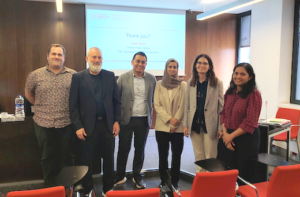
Committee:
– President: Dr. Daniel Spikol (University of Copenhagen)
– Secretary: Dr. Jonathan Chacón Pérez (UOC)
– Member: Dr. Roberto Sanchez Reina (UPF)
Abstract: Computer-Supported Collaborative Learning (CSCL) emphasizes the role of technology in facilitating collaboration among learners, often structured using Collaborative Learning Flow Patterns (CLFPs), which are useful when scripting the flow of collaborative learning scenarios. In this thesis, an orchestration tool called PyramidApp that deploys a particularization of pyramid patterns was used to enable teachers to design and implement CSCL scripts based on the Pyramid CLFP. However, real-time regulation or the orchestration of CSCL activities places a demand on teachers, contributing to the orchestration load. Orchestration load is a multifaceted construct and refers to the effort necessary for the teacher to conduct learning activities. While providing support to keep orchestration load at reasonable levels is essential in the design of CSCL tools, its estimation remains challenging due to the lack of measuring instruments. Therefore, this doctoral thesis leverages multimodal data analytics, including physiological data obtained from non-invasive sensors that allow continuous, unobtrusive monitoring of teachers’ orchestration actions, enabling more authentic and scalable analysis of orchestration load in real CSCL situations. To this end, this dissertation addresses the following main research question: What can multimodal data reveal about teachers’ orchestration load in scripted CSCL settings? By examining how teachers regulate CSCL activities across different learning settings, dashboard designs, among other contextual factors, this thesis aims to investigate the potential of multimodal data analytics to understand the factors that impact teacher orchestration load in scripted CSCL.
The main findings of this dissertation highlight the potential of triangulating subjective data and objective data for estimating teacher orchestration load. The analysis reveals that both the learning setting (co-located vs. online) and the dashboard design (mirroring vs. alerting) influence the orchestration load. Overall, this dissertation proposes a novel methodological approach to gain a comprehensive understanding of teacher orchestration load in scripted CSCL. It contributes to data collection scenarios for estimating the orchestration load in authentic classrooms, revealing factors influencing orchestration load. Moreover, this approach paves the way for future research to expand upon these insights obtained across diverse factors related to CSCL.
Publications:
Hakami, L., Hernández‐Leo, D., Amarasinghe, I., & Sayis, B. (2024). Investigating teacher orchestration load in scripted CSCL: A multimodal data analysis perspective. British Journal of Educational Technology, 55(5), 1926-1949. https://doi.org/10.1111/bjet.13500
Hakami, L., Amarasinghe, I., Hakami, E., Hernandez-Leo, D. (2022). Exploring Teacher’s Orchestration Actions in Online and In-Class Computer-Supported Collaborative Learning. In: Hilliger, I., Mu.oz-Merino, P.J., De Laet, T., Ortega-Arranz, A., Farrell, T. (eds) Educating for a New Future: Making Sense of Technology-Enhanced Learning Adoption. EC-TEL 2022. Lecture Notes in Computer Science, vol 13450. Springer, Cham. https://doi.org/10.1007/978-3-031-16290-9_45
Hakami, L., Sayis, B., Amarasinghe, I., & Hernandez-Leo, D. (2024). Exploring teacher orchestration load in scripted CSCL: The role of heart rate variability. In Proceedings of the 17th International Conference on Computer-Supported Collaborative Learning-CSCL 2024, pp. 163-170. International Society of the Learning Sciences. https://doi.org/10.22318/cscl2024.27680
Hakami, L., Hernandez-Leo, D., & Amarasinghe, I. (2025). Analysing Teacher Orchestration Actions When Using Alerting and Mirroring Dashboards in CSCL. In 2025 IEEE International Conference on Advanced Learning Technologies (ICALT) (pp. 88-92). IEEE. https://doi.org/10.1109/ICALT64023.2025.00031
More under review.
And participated in related work:
Hakami, E., El Aadmi-Laamech, K., Hakami, L., Santos, P., Hernández-Leo, D., & Amarasinghe, I. (2022). Students’ basic psychological needs satisfaction at the interface level of a computer-supported collaborative learning tool. In International Conference on Collaboration Technologies and Social Computing (pp. 218-230). Cham: Springer International Publishing. https://doi.org/10.1007/978-3-031-20218-6_15
Hakami, E., Hakami, L., Hernández-Leo, D., & Amarasinghe, I. (2023). Triggers of teacher-perceived stressful moments when orchestrating collaborative learning with technology. Proceedings of the Learning Analytics Summer Institute Spain 2023 (LASI Spain 2023), pp. 1-10).
Alvarez, C., Amarasinghe, I., Zurita, G., Hernandez-Leo, D., Hakami, L., & Rojas, L. (2025). Measurement of Teacher’s Orchestration Load: A Framework and a Case Study on Tool Flexibility. IEEE Access, vol. 13, pp. 39035-39050. DOI:10.1109/ACCESS.2025.3531241